Functions
In the event of any dispute arising between telecommunications carriers, terrestrial TV broadcasters, cable TV operators, etc., the parties can use the dispute settlement system as follows.
Overview of the major systems to settle disputes
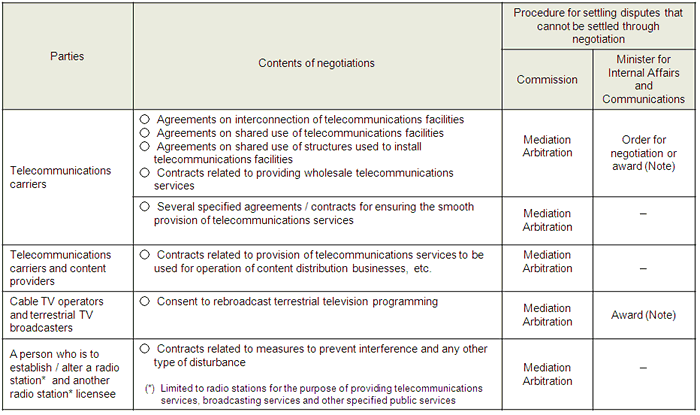
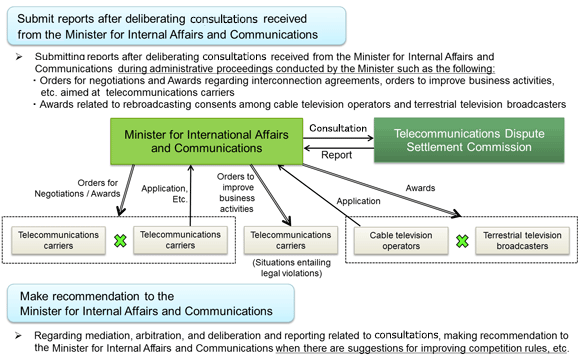
(Note) In the case of "order for negotiation" or "award," the Minister for Internal Affairs and Communications requests advice from the Telecommunications Dispute Settlement Commission.

Mediation
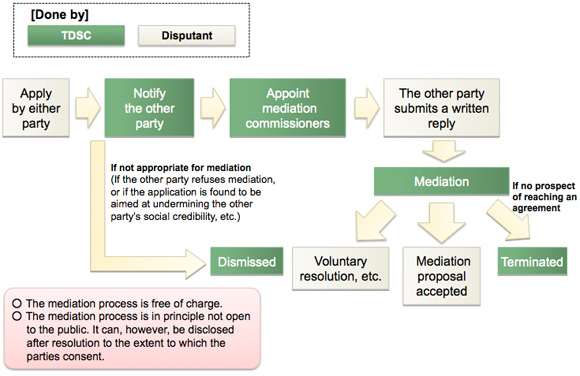
Mediation is a process in which mediation commissioners appointed from among commissioners and special commissioners by the commission for each individual case act as mediators to help the disputants reach a mutual agreement and achieve a prompt resolution.
The Mediation process is not mandatory because it is carried out based on mutual agreement.
The process is free of charge and is in principle not open to the public.
Flow of Mediation
Arbitration
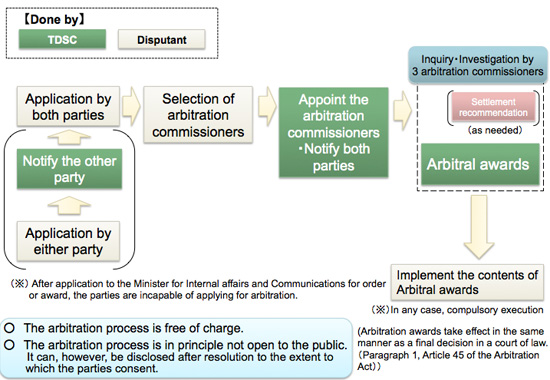
Arbitration is a means to solve disputes in which the disputants agree to follow the arbitration award made by three arbitration commissioners who are basically selected under agreement by the disputants and appointed by the commission.
The arbitration award, unlike Mediation, takes effect between the disputants in the same manner as a final decision in a court of law and the disputants cannot take the matter to court unless there was a defect in the process, because the procedure is performed under agreement that the parties abide by the arbitration award.
The process is free of charge and is in principle not open to the public.
Flow of Arbitration
Deliberation / Report / Recommendation
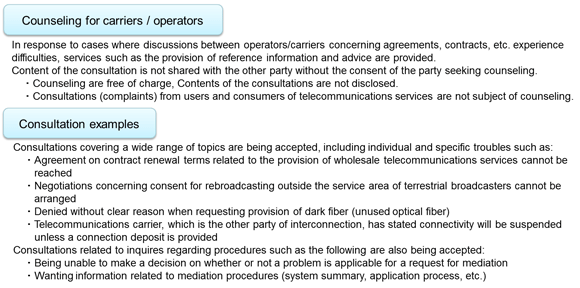
Counseling for carriers / operators